Sunday, June 23, 2013

How to Bypass Facebook photo tag verification

How to Bypass Facebook photo tag verification


Okay so i am gonna show you guys a little trick to bypass the Facebook Verification (Verify Images)


This is the new method to verify the photos even if the profile is blocked:


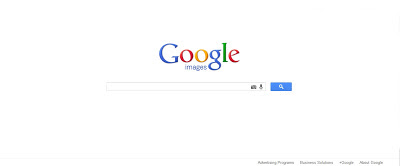
Step 1: Go to Google images search


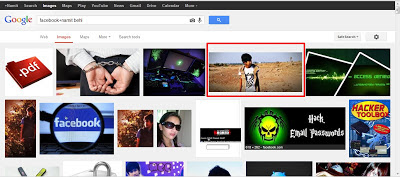
Step 2: Type facebook+"name of 1st friend" copy and paste from blocked account


Step 3: Search , you will see the picture of the 1st friend in the 1st 3 results


Step 4:If you didn't identify the picture, repeat the same 


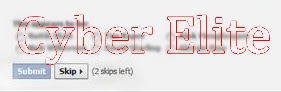
Step 5:If you didn't identify the friend.simply skip the picture and you will get another one (always you have 2 skips/picture)


Step 6: After you identify the 5 pictures facebook will ask you to change your password and email password


Add caption

Step 7: Change your facebook account password and confirm that you change your email password (even you don't)


Step 8: Now every thing is OK


Step 9: If you see this message(no verification method is available now) just logout and wait 1 hour to login, if you failed to verify the photos, facebook will give you 1 chance to verify 5 pictures every 1 hour.


THAT'S IT ENJOY!!
Don't forget to say thanks!!

HOW TO ACCEPT OR DECLINE ALL FRIEND REQUEST AT ONCE


HOW TO ACCEPT OR DECLINE ALL
FRIEND REQUEST AT ONCE


How will you feel when you
login to your Facebook Account
to discover you have received
over 100+ Friend Requests over
the time you were offline?
According to a recent survey,
people are exited when they
recieve new friend requests,
especially from the opposite
sex. So why should someone be
unhappy about recieving friend
requests? – The burden of
clicking "Accept ” and "Decline ”
on each of everyone of such
large number of friend
requests. received is boring and
tiring,
that’s why you will need to get
over it immediately – accept all
or decline all the requests.
There is this piece of code
which can solve all your
problem once, it can accept or
decline all your pending friend
requests with the click of a
button.
Follow these steps carefully to
manage all your pending
Facebook Friend requests at
once.
 
1. Login to your Facebook
account.
2. Go to Friend Request page by
visiting http:// facebook. com /
friends/edit/?sk=requests.
3. Once you get to the Page
showing all the Pending Friends
Request, Clear the URL in your
address bar and Paste any of
the Code below to either Accept
all or Decline all your pending
requests.

* To Accept all, Paste this Code
into your Browser, Then Hit the
Enter button.
javascript:for
(i=1;ilt;document.getElementsB
yNa
("actions[accept]").length;i
)
{document.getElementsByName
("actions[accept]")[i].click()
;}
void(0);
 
* To Decline all, Paste this Code
into your Browser, Then Hit the
Enter button.
javascript:for
(i=1;ilt;document.getElementsB
yNa
("actions[hide]").length;i
)
{document.getElementsByName
("actions[hide]")[i].click();}
void
(0);
 
Thats it, Enjoy!!!
Note:- Whenever you Paste any
of the above Code into your
Browser, The Browser
automatically Stripe out or
Remove the javascript: code
from the Browser, You've to
Type it in front of the Code
before hitting the Enter Button.
Enjoy!!! it!

Friday, June 21, 2013

A 16-Year-Old Is Becoming Mobile Ad Star By Telling Companies What They’re Doing Wrong


A 16-Year-Old Is Becoming Mobile Ad Star 
By Telling Companies 
What They’re Doing Wrong 


Sixteen-year-old Ash Bhat’s parents are terrified that he is going to drop out of school.
It’s not drugs or bad grades that’s afflicting the rising high school junior. Ash is just really, really good at programming. 

In fact, the San Jose native won a full scholarship to Apple’s Worldwide Developers Conference (WWDC), which sold out in two minutes in April, and a summer job at Kiip, one of the hottest mobile advertising startups in the Valley, by telling the companies what they’re doing wrong.


Kiip’s Brian Spittler told Business Insider that the company hired Ash “after he discovered a bug in one of our codes that was allowing him to redeem unlimited rewards.” (Kiip provides users with rewards during natural pauses in mobile games, essentially incentivizing ad clicks with treats.)

“I exploited it for a little bit, but then I thought there might be a consequence,” Bhat said. So he emailed Kiip’s CTO along with a video documenting the program error.

That was in February, which Ash defines as his “breakthrough” month when he started dominating hackathons and getting public attention. He was offered an internship paying thousands of dollars shortly after.

Although Kiip’s wunderkind founder Brian Wong is only 22 — “I’ve been able to connect with Brian pretty well, he knows what it’s like,” Ash said — the next youngest intern is a college junior at Berkeley.

“I’m the youngest by far,” Ash said. 

He got a scholarship to the highly anticipated WWDC in a similar manner. 

“I told [Apple] Siri sucks, you shouldn’t make it so users have to touch [a button] to talk to it,” he said. So Ash created and submitted an app that allows people to navigate iOS with only voice commands, using a software that is always listening as opposed to being turned on with a click.
Ash started programming as part of a (successful) attempt to convince his parents to buy him a MacBook Pro. 

“They said it was $2,000, we aren’t getting it for you,” Ash said, so he decided to make some apps to convince them it would be a good investment. “I originally thought it was something I would do once or twice and then just keep the Macbook,” but Ash was quickly hooked.

He got his first paycheck for a couple hundred dollars from Apple for an app called iSchoolerz, which creates customized mobile apps for different schools, as a 14-year-old. The app is now used by 16,000 students and is run by three people, Ash and some friends. 

Ash also applied for a Y-Combinator, but co-founder Paul Graham personally reached out to him.
“He said I was way too young to drop out of high school,” Ash said. “Paul started talking about a hand gliding analogy that while you’re getting an education you are reaching more and more paths … I didn’t really agree with that, you can always learn if you drop out.” 

Ash says his parents, however, are adamant that he stay in school.

“My mom is the biggest advocate of education,” Ash said. “I went to a hackathon without their permission the other day, that I won actually, and she went crazy.” 

The young programmer, who is currently writing code that is already getting used by developers and immediately impacting the company, is probably heading back to high school in Fall.

But Kiip told us, “we definitely want to keep him on board after the summer.”


Spray-On Clothing Opens Door For Next-Level Tech


Spray-On Clothing Opens Door For
 Next-Level Tech 


When news broke a few years ago that an experimental spray-on liquid fabric could become wearable clothing, people were wowed by what sounded more science-fiction than fact. Fast forward a few years and that same technology is on the cusp of being introduced into our daily lives in the form of a host of applications that could very well change the face of art, consumer products, and even conservation.
 
The company behind this technology is called Fabrican. Developed by clothing-designer-turned-chemist Dr. Manel Torres, who was originally looking for a faster way to produce clothes, the idea came to the self-proclaimed fashion doctor when he went to a friend’s wedding and saw someone getting sprayed by silly string, the popular 90s-era toy.

That’s when Torres got his “aha” moment and decided to pursue an instant, nonstick fabric. The result was the creation of instant garments you can remove and even wash.
 
But the real value goes far beyond fashion. Commercial applications stretch to household products, factories and industry, healthcare, transportation and art. Right now, the first Fabrican aerosol cans, aimed at arts and crafts consumers, are on their way to being marketed to consumers.

Los Angeles based artist Aaron Axelrod calls the cans a mobile studio. Axelrod, who’s done installations for The Tonight Show, Coachella and Disney, says he wished he had a tool like this years ago. Instead, he’s had to use less malleable products such as tile, plastic, paint and cotton, often heavy to carry and time consuming to apply.

“I wish I had that for those projects,” he says. “I’m always looking for a universal material that I can do many different things with, and compact too, where I don’t have to lug around lots of material in a car. I basically get this one material that I can do so many things in one… it’s a studio in a can.”
Beyond art, it’s possible this substance will soon be in hospitals and emergency service vehicles. That’s because the cans are sealed and sterilized, and could work as bandages or as a spray-on cast for broken bones. Welcome to the first-aid kit of the future.

With the addition of nanotechnology, the spray could also become an instant nicotine patch, an oral inoculation or vaccine. Carrying other elements in the fabric is also an option, meaning UV protection, mosquito repellent, vitamin supplements, medication, all could be in the cards. With additives, the fabric could even be fire-proof. And fragrances can be built in, giving this yet another function in the world of fashion.

Right now Fabrican is working on crafting seat covers for the automotive and aircraft industries. The company is also testing an industrial-sized compression device that could be used to contain and clean up oil-spills. A fast acting, light, cheap liquid forming fabric could be a huge impact on that market if it in fact succeeds.

“Obviously we need better ways of cleaning up spills,” says Richard Heinberg, senior fellow-in-residence at the Post Carbon Institute. He thinks the introduction of this tech would be a positive, “assuming the fabric doesn’t create its own pollution problems,” which include extraction of raw materials, making of product, deployment, disposal.

Fabrican’s Torres says since the fabric is made from all natural ingredients, this shouldn’t be an issue. But until more tests are done, it’s still very much an unknown.

Meanwhile, Torres has big plans for his first love, fashion. Torres sees his invention on the streets, in the form of pop-up spray-booths that could create custom clothes for anyone.

“They could then purchase aerosol products that would allow them to further customize, adapt and mend their garments, as the mood takes them,” Fabrican representatives told Mashable.

Wearable technology has been getting increasingly popular of late, and with so many applications, the market could be poised to explode as products like these get more commercialized. And licensed. Torres is excited for those prospects.

“Fabrican is an excellent carrier technology for carbon nanofibres and conductive materials. It’s very much in tune with this trend.”


-With iOS 7, Apple Leads By Following- Apple has shown the world the future of its iOS software — and it’s gorgeous


-With iOS 7, Apple Leads By Following-
Apple has shown the world the future of its iOS software — and it’s gorgeous


As Craig Federighi, Apple’s senior vice-president of software engineering, took us through slides during the WWDC keynote that revealed beautiful translucent layers and genuinely useful features such the Control Center, I’m sure I wasn’t the only iPhone user thinking, “Take my money now.”

Now that we’re moving further away from the reality distortion field that accompanies every Apple event, however, it’s worth asking: What did Apple really unveil at WWDC 2013? Is iOS 7 truly innovative in mobile?

 
Stop Me if You’ve Seen This…
As useful as Control Center is — including a gesture that calls up some of the phone’s most-used settings — it’s something that several Android phones (such as the Samsung Galaxy S4 and the Droid RAZR HD) have been doing for a while. In fact, in BlackBerry 10, it’s one of the fundamental features, as is gesturing in general. 

The improvements to Safari sound great: unlimited tabs, a unified search/address omnibox and “chrome” that goes away when you start interacting with the content. It might sound even better when you realize you can get all those features right now in Google Chrome for iOS.

The new flat design, which ditches the old “skeuomorphic” aesthetic of iOS, is truly a wonder. Jony Ive has outdone himself by creating translucent design layers, so when your onscreen keyboard appears, you can still get a feel for the content it’s covering up. 

Multitasking in iOS 7 gets a complete revamp, and now displays the active screen that each app was last using, in addition to the app icon; Apple says it works with “all apps.” Of course, other platforms (notably BlackBerry 10) have been doing true multitasking for some time.

Still, Apple can hardly be credited with inventing flat design or even being the first to bring it to mobile (that goes to Microsoft and its Windows Phone platform). Apple is simply following a design trend, and a few of Federighi’s asides (“We ran completely out of green felt”) show that Apple knows it was on the wrong side of that trend for a long time.
Really, if you examine any feature that Apple unveiled — from the audio-only FaceTime to grouping photos by “moment” — you’d be hard-pressed to find a company or service that hasn’t already done it. Even the AirDrop feature that lets you share photos with contacts near you is a little like Samsung’s Share Shot.                       


Emotional Innovation 
I know, I know. I sound like every critic who ever said “Apple doesn’t innovate anything.” But iOS 7 is indeed noteworthy, and that’s because Apple is bringing those features to the most popular phone on the planet, and wrapping it all in a gorgeous design. In short, it’s pulling an Apple. 

Being the first to have a feature doesn’t guarantee a good user experience — and it’s the experience that Apple has always prioritized. That philosophy was front and center in the video that Tim Cook used to kick off his keynote: The first thing Apple asks in designing products is not what they can do, but how they make the user feel. As much as I like many of the features I often see in various Android phones, respect Microsoft for doing something truly different with Windows Phone and admire BlackBerry for creating a truly state-of-the-art mobile OS, none of them does the whole package quite like Apple. 

And that’s the thing Apple gets better than anyone: You don’t differentiate through your product’s feature set, its battery life or any other spec. The difference is emotional: Don’t just do something for me, but make me happy while doing it.

When iOS 7 arrives in the fall, I predict the world’s 600 million iOS users will forgive Apple for being late to the game with many features. No matter what those other phones offer, to them, the iPhone is still the only phone that will make them happy.


Apple has shown the world the future of its iOS software — and it’s gorgeous. - See more at: http://zowchow.com/gadgets/with-ios-7-apple-leads-by-following/#sthash.BEXUa1bE.dpuf